

Most corporate video quotes in Singapore arrive as a single number with no explanation. One studio says S$6,000. The next says S$22,000. The brief was identical.
The gap is real, and it is explainable. This guide breaks down what corporate video actually costs in Singapore in 2026 — by project type, by production phase, and by the kind of vendor you hire — plus the line items that quietly inflate a budget after you have signed.
The short answer
A standard 2–3 minute corporate video in Singapore costs between S$6,000 and S$18,000 in 2026.
Below that, you are into single-day shoots with minimal crew. Above it, you are paying for talent, multiple locations, or heavy post-production. Across the wider market, published rates run from roughly S$1,500 for straightforward freelance work to S$60,000 and beyond for multi-location branded films.
Those bands vary more than most guides admit. Singapore production companies publish standard-video figures anywhere from S$2,500 to S$30,000 depending on how they define “standard” — so treat any single range, including this one, as a starting point rather than a quote.
Corporate video costs by project type
| Video type | Typical budget (SGD) | Turnaround | What drives the cost |
|---|---|---|---|
| Short social / testimonial | $1,500 – $5,000 | 1–2 weeks | Single location, small crew, interview plus B-roll |
| Event highlight film | $1,500 – $10,000 | 1–3 weeks | Multi-camera, crew size, number of event days |
| Standard company profile | $6,000 – $18,000 | 4–8 weeks | Scripted, 1–2 shoot days, voiceover, motion graphics |
| Animated explainer (2D) | $4,000 – $12,000 | 2–4 weeks | Scriptwriting, design, animation, voice talent |
| Animated explainer (3D) | $8,000 – $25,000 | 4–8 weeks | Modelling, rigging, texturing, render time |
| Premium branded film / TVC | $25,000 – $60,000+ | 6–12 weeks | Cast, multiple locations, cinema gear, VFX |
Two notes on reading this table. Animation is often priced per finished minute, not per project — a 90-second explainer and a three-minute one are not the same job. If you are weighing the two formats against each other, we have set out the differences in explainer video versus corporate video. And same-day or next-day event edits are an upcharge, typically S$800–1,500, not an included turnaround.
Where the money goes: a phase-by-phase breakdown
For a mid-tier S$10,000 corporate video, the budget splits roughly three ways.
Pre-production — around 25% (S$2,500)
The phase clients most often assume is free. It covers strategy and messaging, scriptwriting and storyboarding, location scouting and permits, casting, and scheduling.
It is also the phase that determines whether the shoot day runs to plan. A poorly planned shoot does not save money — it spends it on the day, at the most expensive possible moment. A tight brief is the cheapest lever you have, and our template for briefing a production house covers what to put in one.
Production — around 45% (S$4,500)
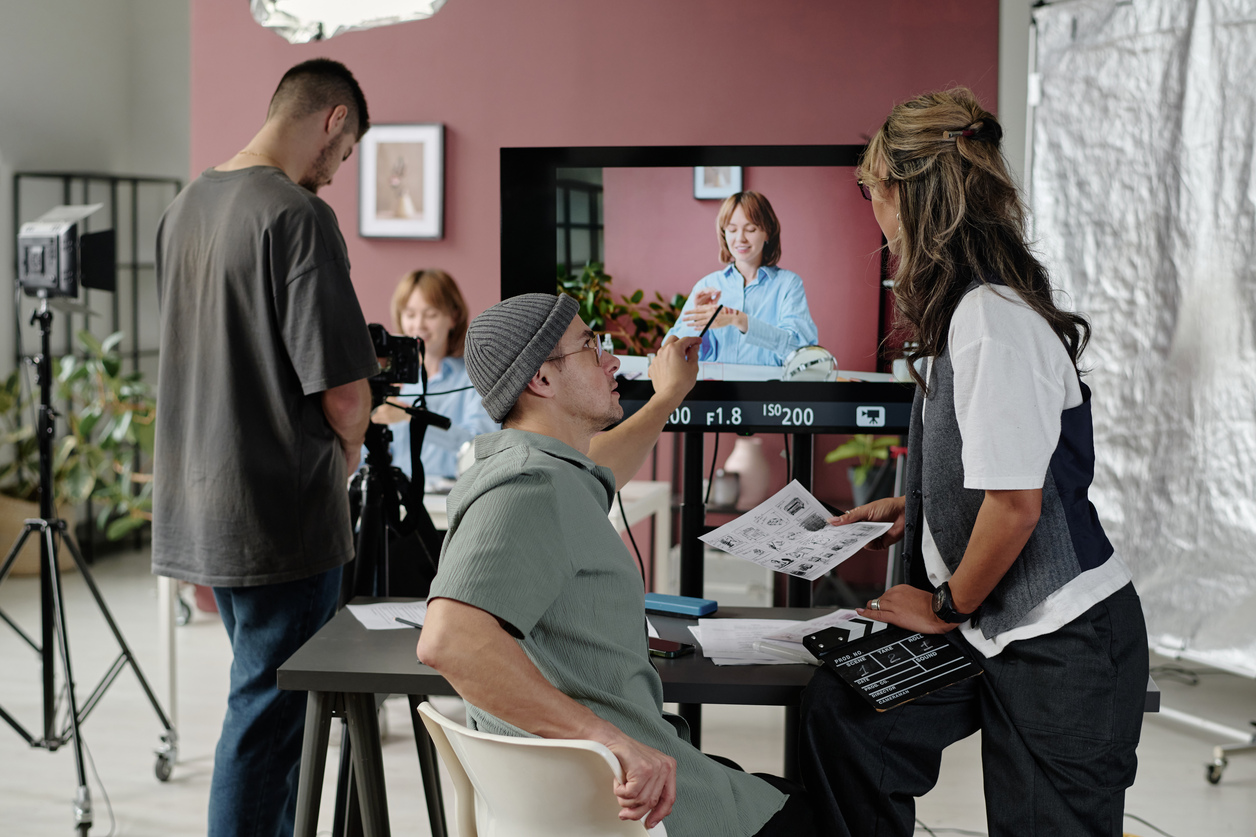
The shoot itself. Crew day rates dominate: director, director of photography, sound engineer, gaffer, production assistants. Then camera packages, lighting, audio, grip equipment, and location fees.
Crew is the single largest variable. A two-person team and a six-person team produce visibly different results, and the difference is mostly in lighting and sound — the two things audiences notice without being able to name. Gear matters too, though less than most clients expect; we have written about what cinema cameras and optics actually change on a constrained budget.
Post-production — around 30% (S$3,000)
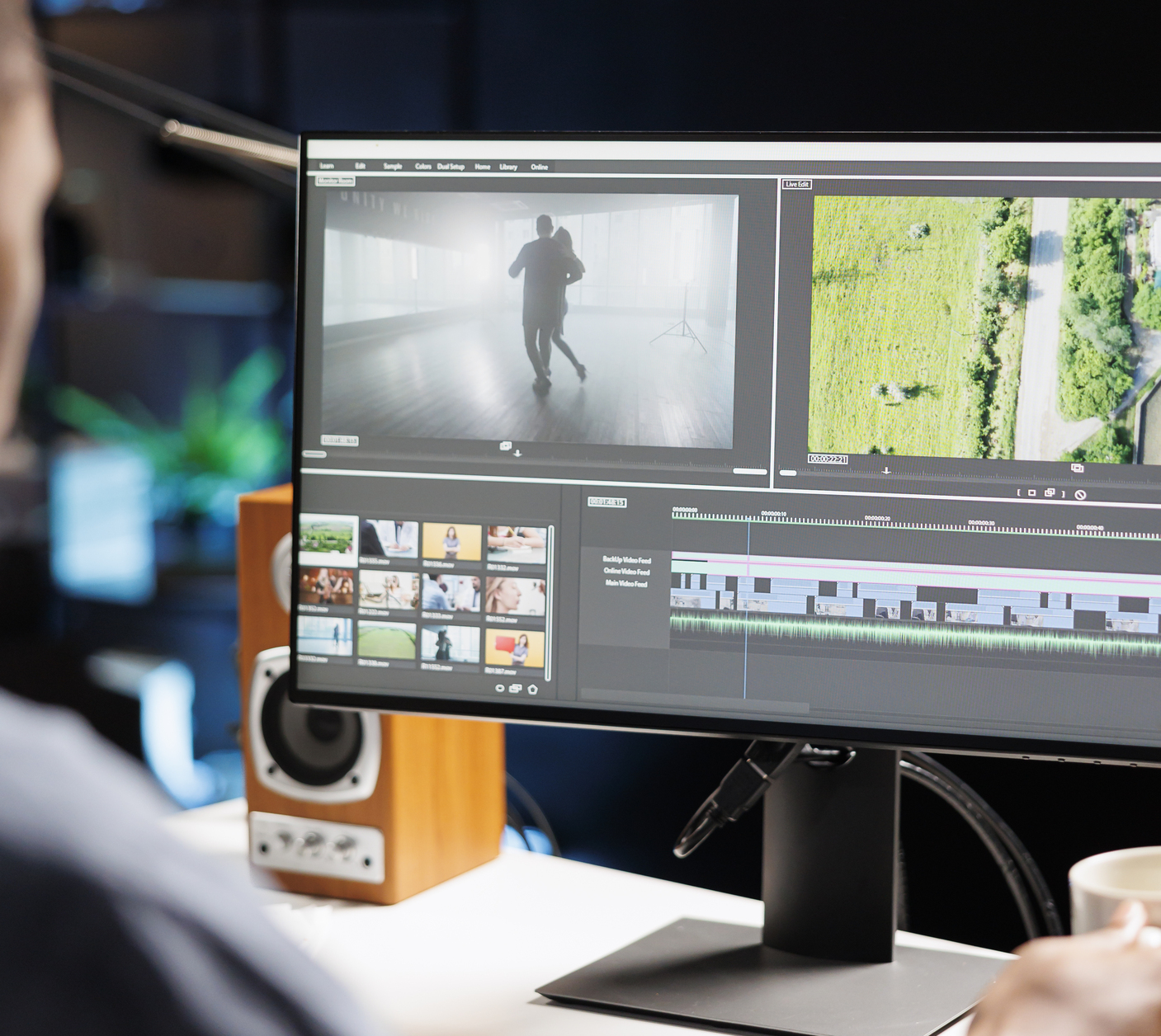
Editing, colour grading, sound mixing, motion graphics, subtitling and versioning. This is where a good shoot becomes a good film, and where a rushed edit wastes an expensive shoot day. If you want the detail, we have broken down what actually happens in post-production.
Heavier post — 3D animation, complex VFX, extensive motion design — moves this well beyond the standard share, and can exceed the production budget entirely.
The four things that move a quote most
- Shoot days and locations. Each additional day carries the full crew and equipment cost. Each additional location adds travel, setup and often permits.
- Professional talent. Actors, presenters and voice artists are quoted per project with usage terms attached — and those terms are renegotiated if a campaign extends.
- Post-production depth. Motion graphics, 3D and VFX scale with seconds of finished footage, not shoot days.
- Revision rounds. Most contracts include a set number. Additional rounds are billable, and a late change in post is rarely small.
Who you hire changes the price more than what you brief
| Vendor type | Typical rate | Best for | Trade-off |
|---|---|---|---|
| Freelance videographer | S$300–2,000/day (S$800–1,800 for an established solo) | Simple internal videos, event coverage | You manage the project, the risk and the gaps |
| Boutique production house | Project minimums from S$3,500, commonly S$8,000–25,000 | Brand films, company profiles, campaigns | Full-service execution, consistent crew and gear |
| Subscription / volume model | S$2,500–8,000 per finished video | Ongoing content volume | Predictable unit cost, less suited to flagship work |
Singapore freelancers quote by the day, not the hour — hourly billing exists at roughly S$100–200 with a two-to-three hour minimum, but it is uncommon for production work.
And a freelancer is not a cheaper production house. It is a different service. The day rate excludes producing, and on a corporate project someone still has to do that work — usually you. The distinction between a production house and a video agency matters here too, and it is not the one most briefs assume.
The costs that break budgets
These rarely appear in an initial quote, and they are the most common source of a nasty surprise.
Who actually owns the video
This one catches Singapore clients out more than any other line item, because the law changed.
Under the Copyright Act 2021, the creator of a commissioned film owns the copyright by default. The commissioning party can continue to use the work for the purpose it was commissioned for — a right arising from the commissioning arrangement rather than a carve-out in the Act — but not ownership. If you want to own it outright, that assignment has to be written into the contract. This reversed the position under the previous Act, and many procurement templates still assume the old rules.
Ask explicitly: do we own the copyright, or do we have a licence?
Usage rights
Standard quotes cover agreed usage — your website, your social channels, a defined period. Broadcast, paid media, regional rollout or perpetual worldwide rights are quoted separately, priced against territory, term and media.
As a reference point, a paid-media usage uplift in Singapore commonly runs around 15–25% of the base cost, and perpetual all-channel rights cost materially more. If you intend to run the film as an ad, say so in the brief — retrofitting rights afterwards is always more expensive than buying them upfront.
Project file buyouts — typically 20–50% on top
Separate from usage rights. Delivery normally means the finished film, not the editable project files. If you want the working files so another vendor can revise them later, that is priced as a buyout — commonly 20–50% of the project fee.
Music and stock licensing — S$50 to S$5,000
Library tracks are inexpensive, typically S$50–300. Recognisable commercial music is not, and licensing is scoped by territory, term and media. Stock footage carries the same structure.
Data storage and archival
Raw 4K footage from a single shoot day runs to terabytes, and someone has to store it. This is the line item almost no Singapore pricing guide mentions — we charge around S$500 a year for project archival, and practice varies widely across the market.
Ask whether your production partner archives project files, for how long, and what retrieval costs. Six months after delivery is a bad time to find out.
How long does it take?
A standard corporate video runs 4 to 8 weeks from brief to final delivery:
- Pre-production: 1–2 weeks — strategy, scripting, storyboarding
- Production: 1–3 days on location or in studio
- Post-production: 2–4 weeks — edit, grade, sound, graphics
Those phases sum to roughly four to six weeks of production work. The rest is your time — script sign-off, availability for the shoot, and feedback rounds on the edit. Approval cycles are the most common reason a project lands at eight weeks rather than four, and they are the part a production company cannot compress for you. We have explained why a two-minute video takes weeks to make if you want the full picture.
Urgent social-first assets can often turn around in 48–72 hours. Campaigns involving cast, multiple locations or heavy animation run 6–12 weeks.
What to ask before you accept a quote
- Do we own the copyright, or hold a licence?
- What usage rights are included, and for how long?
- How many revision rounds, and what does an extra round cost?
- Who is actually on the crew? Named roles, not “our team”.
- Are location permits and fees included or billed separately?
- What happens to the raw footage and project files afterwards?
- What is the deliverable list — aspect ratios, versions, subtitles, formats?
- Is the quote inclusive or exclusive of GST?
A quote that answers all eight is comparable. One that does not is a number, not a proposal.
Frequently asked questions
How much does a 2-minute corporate video cost in Singapore?
Between S$6,000 and S$18,000 for a standard scripted company profile. Simpler interview-led pieces start from around S$1,500; premium branded films with cast and multiple locations run from S$25,000.
Why is 3D animation more expensive than live action?
Cost scales with seconds of finished footage rather than shoot days. A live-action shoot captures a lot of usable material in a single day; 3D requires modelling, rigging, texturing, lighting and render time before anything moves, and most of that cost is incurred before the first frame is approved. 3D is also frequently priced per finished minute rather than per project.
Can I use my own office to save money?
Often yes, and it removes location fees. Budget for the trade-off: offices usually need additional lighting and sound treatment, and a working office restricts shooting hours. The saving is real but smaller than most clients expect.
What is the cheapest way to produce a corporate video?
Narrow the scope, not the craft. One location, one message, one deliverable, minimal graphics. Cutting crew or post to hit a number produces something that looks like what it cost.
Do production houses in Singapore charge GST?
Only if they are GST-registered. Registered vendors must add GST at 9% on top of the quoted fee. Registration is compulsory above S$1 million in taxable turnover and optional below it, so a vendor that is not registered cannot charge GST at all — which means a freelancer’s quote and an agency’s quote may not be comparable on their face. Always check whether a figure is GST-inclusive or exclusive before putting two quotes side by side.
Getting an accurate number for your project
Cost follows scope. The fastest way to a realistic figure is a clear brief: what the video is for, who it speaks to, where it runs, and what success looks like.
We Are Heroes produces corporate video in Singapore for organisations including Mandai Wildlife Group, Smart Nation Singapore and OCBC Malaysia, alongside broader video production for brand and campaign work. If you would like a scoped quotation rather than a range, tell us about your project.



